Writing · 4 min read
Turn your script into a playable visual novel
Upload a manuscript to VN Studio, choose faithful adaptation or inspired reference, place the choices, and review each chapter against your text.
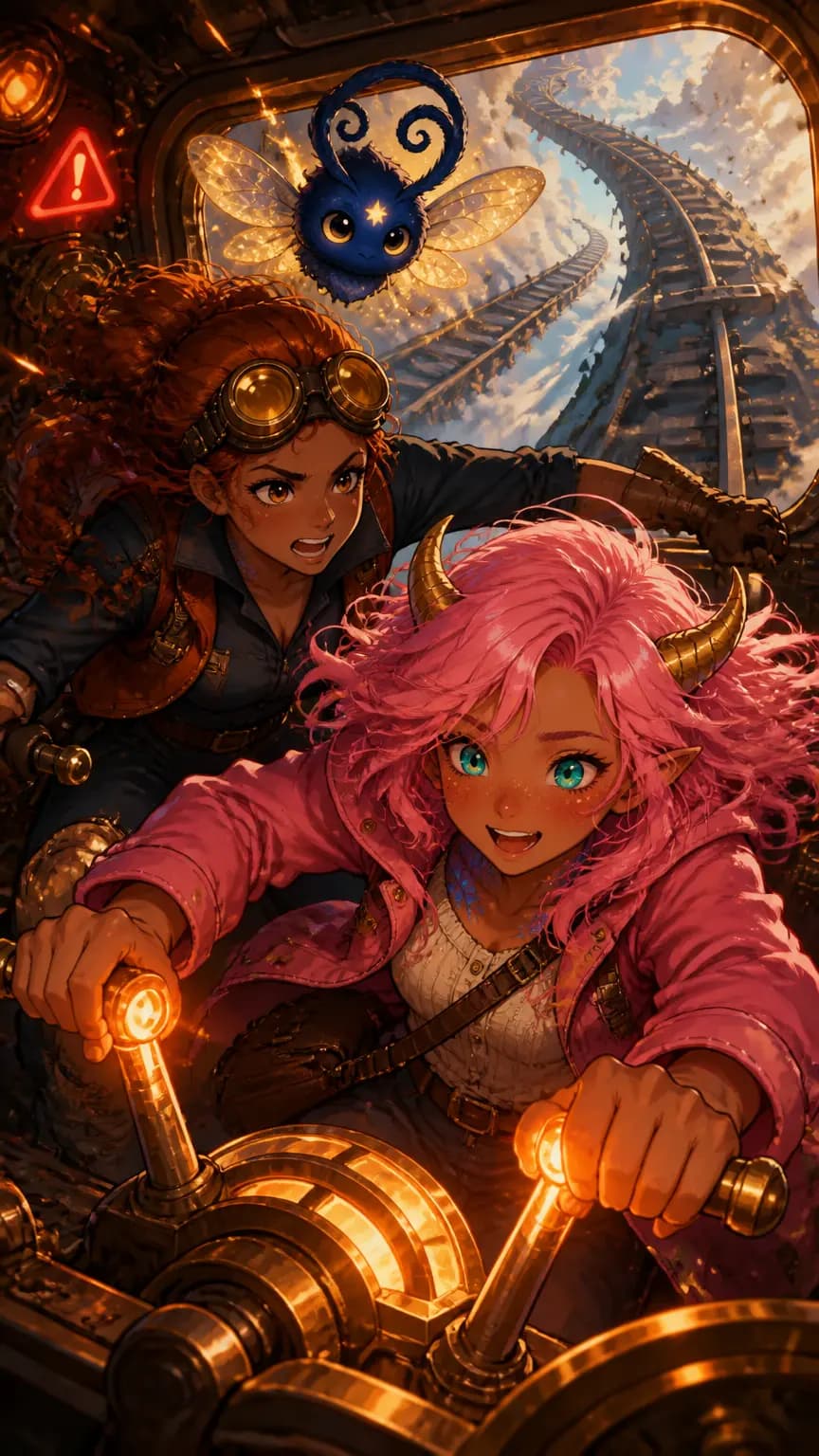
If the story is already written, as a screenplay, a short story, a stage play, or a chapter of a novel, you do not need to retype it as prompts. VN Studio can take the file itself and use your text as the source of the adaptation.
The example here is an invented short story of about twelve pages: two sisters meet at their late mother's house to divide her garden before the house is sold. It has two speaking characters, one location, and an ending the author wants to keep exactly as written.
Upload the manuscript
In the VN Studio chat, use the File button or drop the file anywhere on the page. Text documents can be TXT, Markdown, PDF, or DOCX. The text is extracted when you upload it and stored with the project, so later chapters are generated from your actual words rather than from a summary. A scanned PDF without a real text layer yields little usable text; export a text-based PDF or a DOCX first.
A project can hold more than one document. If the story is split into parts, upload them together. The startup brief then lets you choose the Default source document to begin with, and later chapters can draw on the other parts.
This is different from importing a game. Uploading a script gives the agent text to adapt, and it builds new scenes, characters, and art from it. If what you have is a finished Ren'Py, WebGAL, or Twine project, use Import a game on the workspace home instead: it converts the game’s own scenes, choices, and assets into a project without rewriting them.
Prepare the file before you upload it
- Write each character's name the same way every time; a nickname in one scene and a surname in the next reads as two people.
- Mark scene breaks clearly, with a heading or a separator line, so each passage has an obvious start and end.
- Keep notes, alternate drafts, and comments out of the manuscript. Put standing instructions, such as tone or maximum line length, in Creator notes instead.
- If the work is long, split it into parts in reading order and upload them together.
Faithful adaptation or inspired reference
When source material is present, the startup brief adds a Source handling setting with two options. Choose deliberately; they produce different stories.
- Faithful adaptation: the uploaded text is treated as the story canon. Each chapter adapts a specific passage of the manuscript, and the agent reads the source before writing, so events, names, and lines stay close to yours.
- Inspired reference: the upload is optional reference and the agent creates more freely around it. Use it for a pitch document, world notes, or a draft you are happy to see reshaped.
For the garden story, the author wants her ending, so Faithful adaptation is the right choice.
Decide where the choices go
Prose and screenplays usually have no choices. Adapting one into an interactive story means deciding where the reader gets a say, and that decision is yours. Put it in your first message: “Adapt faithfully and keep the ending. Add one choice in the middle: the younger sister can tell the truth about the missing rose bushes or blame the buyer. Both routes reach the same final conversation, with different dialogue.”
One well-placed choice that changes how a known ending feels is often better than branching the plot away from the story you wrote. If you want the adaptation to have no choices at all, choose Single route in the startup brief, which keeps to a focused main route with fewer branches, and say it plainly in your message: “No choices; keep it linear.”
Review the adaptation chapter by chapter
Faithful adaptations are built one chapter at a time. When a chapter is finished, the agent summarizes it and suggests discussing where the next one should go; the next chapter then adapts the following passage of the manuscript. Read each chapter against your text before moving on.
- Are the key lines yours, not paraphrases?
- Was any scene the story needs merged or dropped?
- Is the choice where you asked for it, with both labels clear?
- Do the character designs match how the text describes them?
Fix small things yourself in the scene editor, and for larger rewrites ask the agent while quoting the passage you mean. Then play the draft as someone who has never read the manuscript: the adaptation works when that reader can follow it without the original.