Getting started · 4 min read
Interactive story formats: how to choose
Pominis has five interactive story formats. What each shows the player, what it is best at, and how to decide, using one premise told five ways.
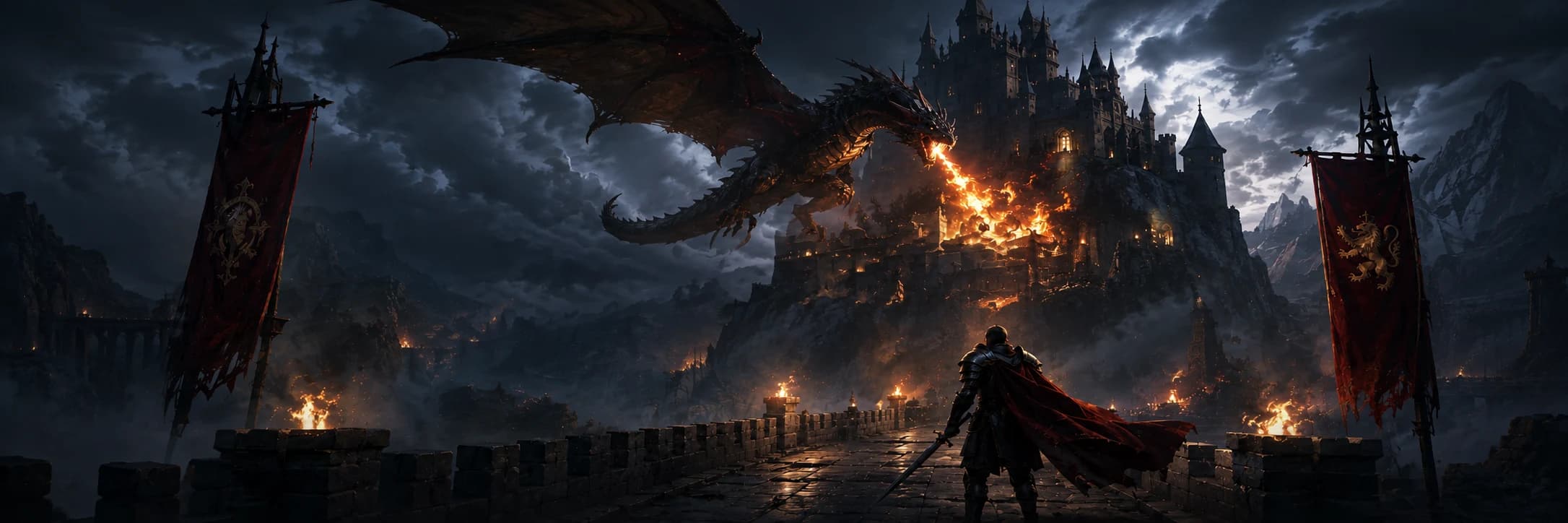
When you start a project in VN Studio, the startup brief asks for a creation format: Classic interactive story, Phone chat story, Hybrid story, Visual presentation, or Text story. The choice decides what the player looks at, how they make choices, and which parts of the project the agent builds, so it is worth making on purpose rather than accepting the default.
To compare them, take one invented premise: a neighborhood bakery is closing after forty years, and the owner's daughter has a week to decide whether to take it over.
Classic interactive story: scenes and dialogue
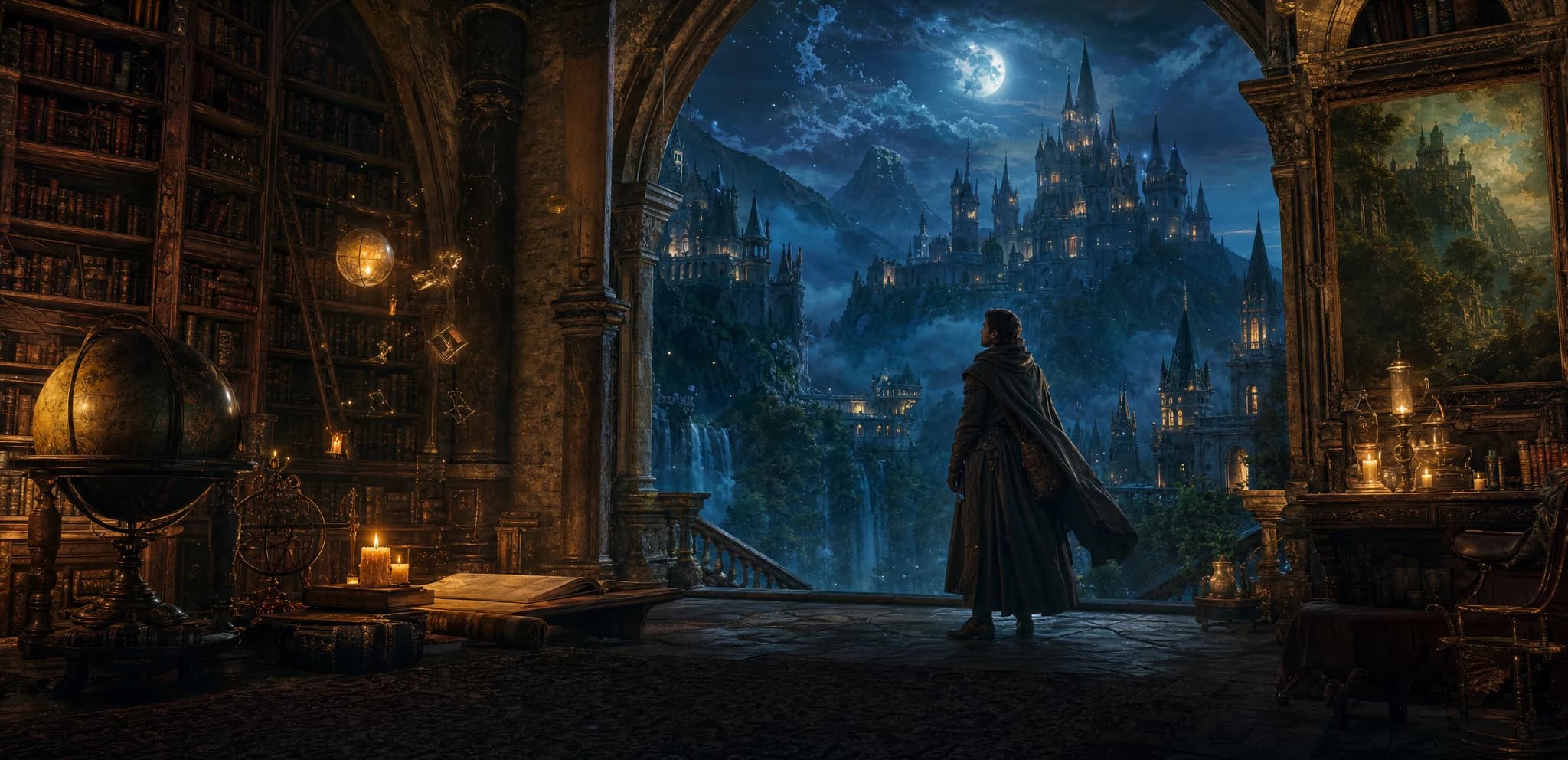
This is the visual novel format: full-screen scene images, characters, dialogue boxes, narration, and choices, played in the visual novel player. It defaults to PC landscape framing. It is the right pick when place and presence matter: the player should see the flour on the counter, the father's face when she mentions selling, the queue that is shorter than it used to be.
It can also carry the most structure. A classic story can use interactive mechanics, such as relationships, investigation, player status, and a backpack, when choices need to add up over time.
Phone chat story: messages and silences
The whole story happens on a phone screen: chat threads with contacts, photos and videos inside messages, typing rhythm, and replies the player chooses to send, with an optional character diary and social feed. It defaults to Mobile portrait. In the bakery story the player would be the daughter texting her brother, her father, and a buyer, and the tension would come from who answers, how quickly, and what they leave out.
Choose it when the relationships live in private conversation, or when the story should feel as if it is happening to the player right now.
Hybrid story: both, at the right moments
A hybrid story switches between phone conversations and cinematic visual-novel scenes, and like the phone format it defaults to Mobile portrait. The bakery story could open with a late-night message from the buyer, then cut to a full scene the next morning, when the daughter confronts her father in the shop. Use hybrid when each mode does a job the other cannot: the phone for what people say in private, the scenes for what happens face to face.
It takes more planning. Decide which beats belong on the phone before generating, or the switches will feel arbitrary.
Visual presentation: a guided, usually linear sequence
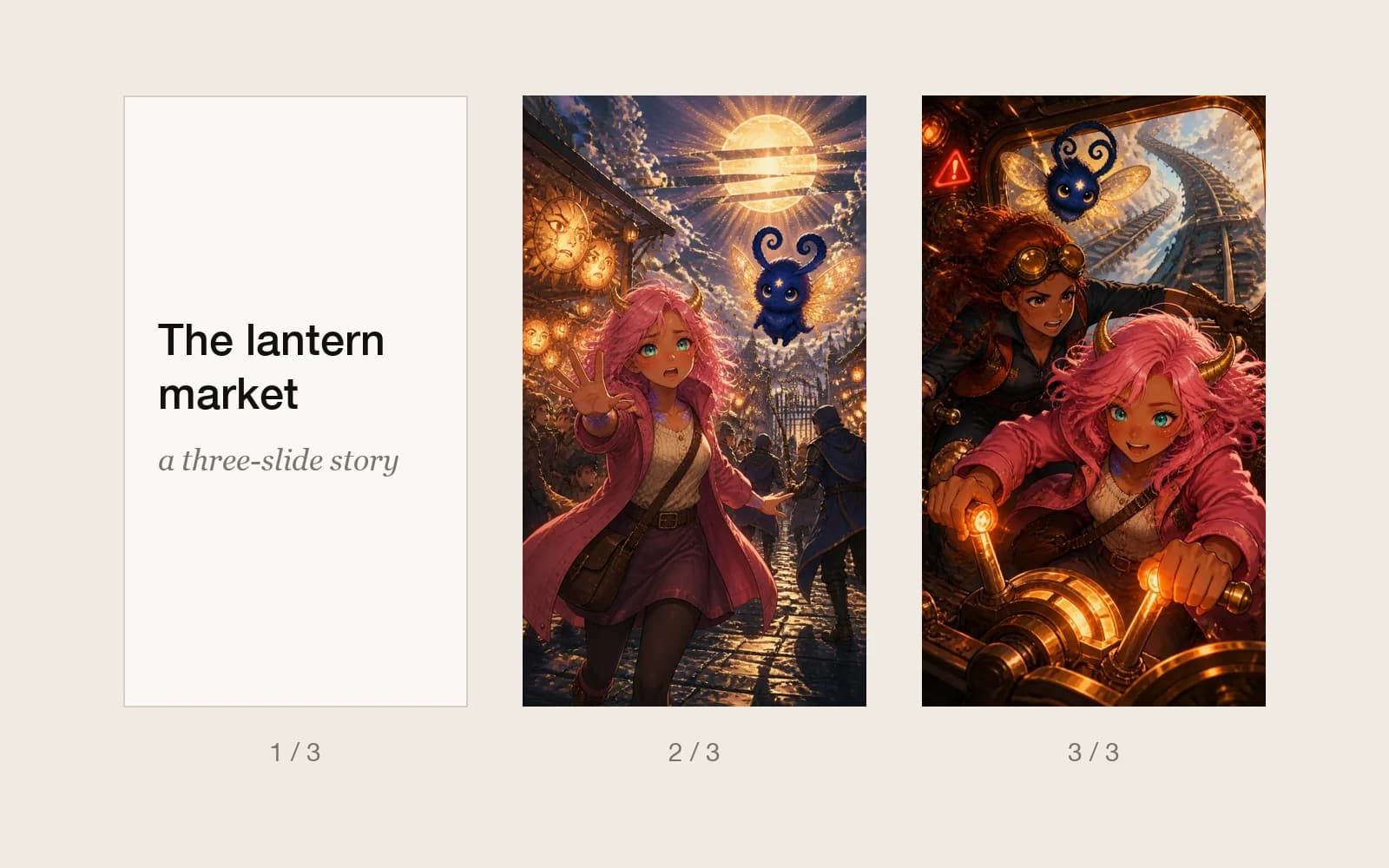
A visual presentation is a concise sequence of illustrated scenes for projects, explainers, ads, or script storyboards. Choosing it in the startup brief fixes the content scope to Short and the flow structure to Single route, and it defaults to Mobile portrait. For the bakery, it would not be the daughter's dilemma; it would be the bakery's story told to its customers, or a storyboard for a short film about it.
Pick it when the goal is to show and explain, not to let the viewer decide.
Text story: prose, one page at a time
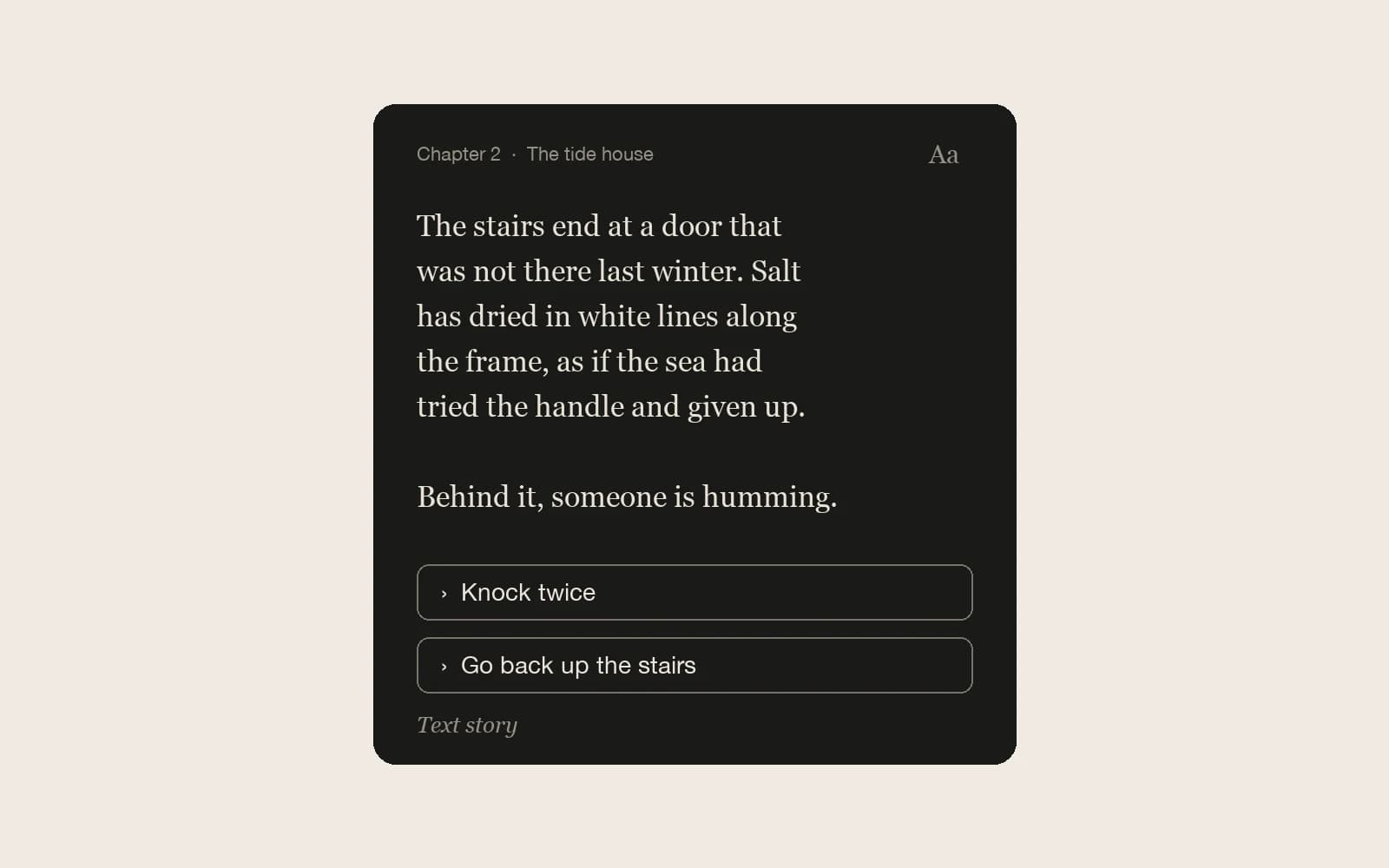
A text story is interactive fiction in prose. The reader gets one page per scene, with a choice where the story turns, in a reader that opens in night mode and lets them change the text size. Scenes need no images, music, or motion; when the text is done, the agent can suggest illustrating a few key moments, and it asks before spending credits on them. A text story can be published with no pictures at all.
For the bakery, it would be the daughter’s week told in her own voice: the smell of the ovens at five in the morning, what her father leaves unsaid at dinner, and a last page on which she signs the papers or does not. Choose it when the writing carries the story and the reader is happy to imagine the shop.
A quick way to decide
- The player needs to see the place and the people: Classic interactive story.
- The story is mostly private messages between characters: Phone chat story.
- Both matter, at specific moments: Hybrid story.
- It is a pitch, explainer, or storyboard rather than a story with choices: Visual presentation.
- The prose carries the story and pictures are optional: Text story.
You can ask the agent to change the settings later; it shows an updated startup brief for you to confirm. Switching format after a draft exists means rebuilding much of the material, though, so settle it early. If you are unsure, write the premise in one sentence and ask where its key choice happens: in a conversation, in a room, or nowhere at all.