Company · 4 min read
Inside three stories our team made with Pominis
What is inside three original stories published by the Pominis team: how each one splits phone and scene, what its choices track, and where it ends.
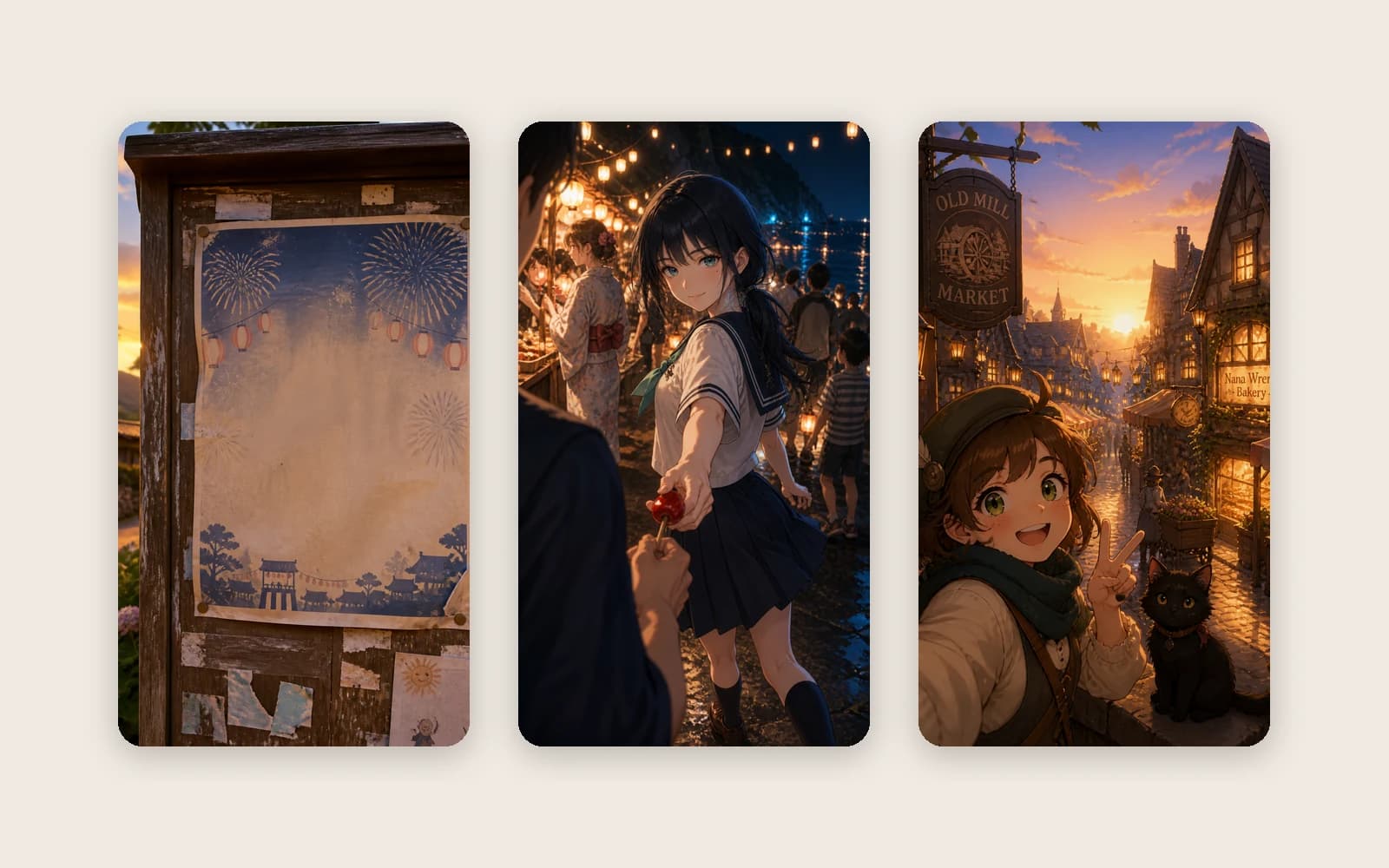
Some of the stories you can play on Pominis were published by our own team. They are ordinary published stories: they run in the same player as every other story on the site, and anyone can open them. Two of them, Fireworks Between Summers and The Bakery That Borrowed Dawn, play on our homepage.
People ask what is inside them, so this post opens up three: those two and The Observatory Below the Tide. All three are hybrid stories in 9:16 portrait, switching between a phone screen and illustrated visual-novel scenes. Every number below comes from each story's published data.
Fireworks Between Summers: a reunion that starts on the train
You are on the train home for summer vacation when a message from Aoi lights up your phone. The shrine festival starts at dusk, and she wants to know whether the old fireworks promise still means anything.
Of its 30 scenes, 18 happen on the phone and 12 are staged as visual-novel scenes. The phone carries the conversation: the reply you send from the train, Fumi's messages from the shrine office, the texts before the fireworks. The staged scenes carry what needs a place: the rural station, the food stalls, the lantern path, the river bank where the fireworks go up.
There are three message threads: Aoi, her friend Fumi Kanda, and a group chat, with the last two opening as the story goes on. The player makes 8 decisions, and the story reaches 2 endings. Both return to the phone for the aftermath, where the messages sit beside a text-first social feed and a first-person diary that remember the night differently depending on how you spent it.
The Bakery That Borrowed Dawn: whimsy with stakes
At 12:07 a.m., Pip texts you: "I TRAPPED THE SUNRISE. in a jar." The town is stuck in a blue predawn, Nana Wren's ovens are cold, and Pip is begging you to help before morning.
A phone story does not have to be a thriller. This one is warm and a little absurd, and its choices still have consequences. Its 26 scenes split into 17 on the phone and 9 staged scenes: a rooftop crossing between chimneys, an attic lit by the jar, and a secret market at the old mill. Pip's messages come with photos, and Nana Wren joins the conversation partway through.
A panel called The Dawn Ledger stays on screen and tracks four things: Pip's trust, a rain-salt recipe clue, how steady the dawn jar is, and where the first bun ends up. Five decisions lead to two endings, "A Dawn Shared Out Loud" and "The Bakery Keeps the Morning", and both close back in Pip's message thread.
The Observatory Below the Tide: a voice from seven years ago
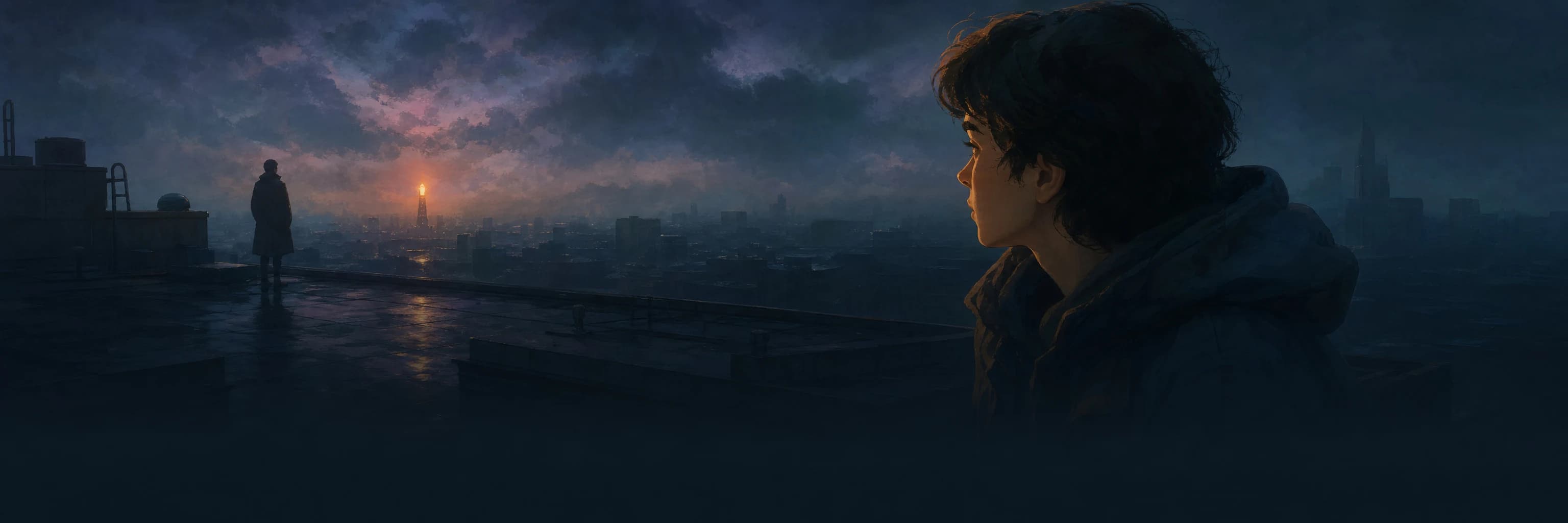
It starts with a 22-second voice message from an unknown sender. Mio Tsukishiro, the astronomy club president who vanished seven years ago, still sounds seventeen. The observatory beneath the seaside cliffs will rise for one night, she says, and Akira has to come before the lowest tide ends.
This one leans the other way: 17 of its 29 scenes are staged and 12 are on the phone. The phone handles the pull of Mio's messages and the check-ins with Nao Fujita, who keeps the astronomy club's log. When Akira crosses the exposed seabed, the phone gives way to staged scenes, and later, at the submerged stairs, both phone channels fail. The scenes use motion such as fog, underwater ripples, and small sparks of light.
A panel called The Tidebound Archive tracks trust with Mio, the astronomy club log, and a sea-glass star map. Six decisions lead to two endings, "Morning, Unwritten" and "A Name the Tide Keeps".
What the three have in common
- Each opens with a single message rather than a prologue: a text on a train, a text at midnight, a voice note from an unknown number.
- The choices move something the player can see. Two of the stories show trust and clues in a panel on screen, and the third carries the night into its aftermath feed and diary.
- The balance between phone and scene follows the story. The reunion and the rescue are mostly messages; the observatory, a story about a place, is mostly staged.
Make your own version
All three stories allow derivatives, so you can publish your own take on any of them, with a "Derived from" link back to the original. Or start from nothing in VN Studio: one opening message and one choice that matters.