Story craft · 5 min read
Choose your own adventure maker: a CYOA guide
How choose your own adventure stories are built: short sections, gates, stats, and fail states, and how to make and share one in Pominis without code.
A choose your own adventure story speaks to the reader as “you”, stops often to ask what you do next, and is not afraid to end badly. That last part is what separates it from most branching fiction. In a CYOA the wrong door can kill you, and finding the way through is part of the pleasure.
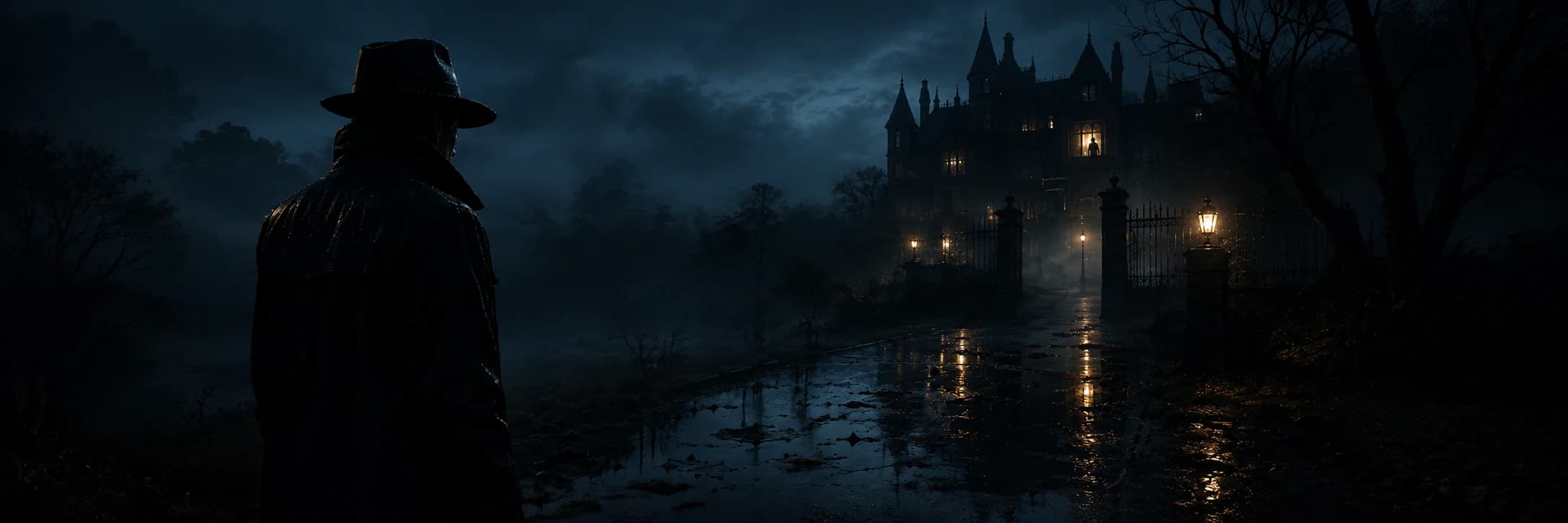
This guide covers the parts every CYOA is made of, then builds one small example: an invented mystery in which you are an insurance investigator sent to a flooded manor to find a missing will before the tide comes back in.
The parts of a choose your own adventure story
- Short sections: a few paragraphs or a handful of lines, then a choice. The reader should decide often.
- Second person: “you” are the protagonist, so choices read as your own actions.
- Gates: paths that only open if you have something, such as an item, a clue, or someone's trust.
- Stats: numbers the story keeps, such as health, time, or suspicion, that change what is possible later.
- Fail states: endings that come from bad choices, which invite the reader to try again.
Choose a structure before you write
Three shapes cover most CYOA stories. A time cave branches at every choice and rarely rejoins, which gives huge variety and an unmanageable number of scenes. A gauntlet is one main path with side branches that end quickly, usually in failure, which is how most classic adventure books keep a long story finishable. Branch and bottleneck lets paths split and then meet again at key scenes, carrying forward what you did on the way.
For a first CYOA, use a gauntlet with one bottleneck. The manor story has a main path through the house, three wrong turns that end it early, and one scene every route must reach: the study, where the will is kept.
Gates: make the reader earn a path
A gate is a choice that depends on something the reader did earlier. In the manor, the study is locked. You can open it with the housekeeper's key, if she trusted you enough to give it to you, or through the cellar, but only if you noticed the tide clock in the hall and know how long you have. A reader who has neither must find another way or run out of time.
Decide how a locked gate appears. A hidden choice keeps the surprise: readers who found the key simply see an extra option. A disabled choice, shown but grayed out with a hint such as “You need a key”, tells readers that something was missed and sends them back to look. CYOA readers usually enjoy the second, because it turns a dead end into a puzzle.
Stats: keep few, and make them felt
Every number you track has to show up somewhere the reader can feel it. The manor uses two: the tide, which counts down with every room you search, and the housekeeper's trust, which rises when you are honest with her and falls when you snoop. Two stats are enough to make choices interesting. Five stats that never change a scene are bookkeeping.
Fail states that invite another try
A bad ending should feel fair, which means the reader could have seen it coming. In the manor, staying in the cellar after the tide clock strikes traps you there; the ending should describe the water rising around the lantern you left on the stairs, and the reader should remember the clock. Keep fail endings short and specific, and give each one a detail that points toward the path that would have worked.
- Trapped by the tide: you ignored the clock.
- Thrown out: the housekeeper's trust fell to nothing and she called the owners.
- The wrong will: you took the first document you found without reading it.
- The real ending: the study, the right document, and the question of who hid it.
Building a CYOA in Pominis
Start in VN Studio with a message that names the structure as well as the premise: “A second-person mystery. You are an insurance investigator in a flooded manor looking for a missing will before the tide returns. A main path through the house, three short failure endings, and one true ending in the study. Track the tide as a countdown and the housekeeper's trust.” In the startup brief, choose Multiple routes so the failure branches are kept.
Gates and stats live on the Interactive mechanics board. It has modules for Relationships, Investigation (clues), Player status (stats), Backpack (items), and General flags. Ask the agent to design them for your story, or adjust one module yourself. A choice can then have a condition, such as trust at least 3 or the key in the backpack, and when the condition is not met the choice is either hidden or shown disabled with a hint you write. Choices can also change values, so searching a room can lower the tide count by one.
There is no special game-over screen: a failure is an Ending node like any other, reached by a route whose condition you set. On the scene board, mark each failure scene as an Ending node, then use Play draft to walk into every trap on purpose. Check that each gate opens when it should and that a reader who does everything wrong still gets a fair ending.
Share it
When the routes work, publish. A public story is free to publish, is listed in discovery, and plays in any browser from its link, so readers can share their worst ending with a friend and dare them to do better. If you want feedback before it is listed, ask specific questions: which trap felt unfair, and which gate they never found.